
Zuniga Health
Your health plan renewal is about to hurt. Here's the fix.
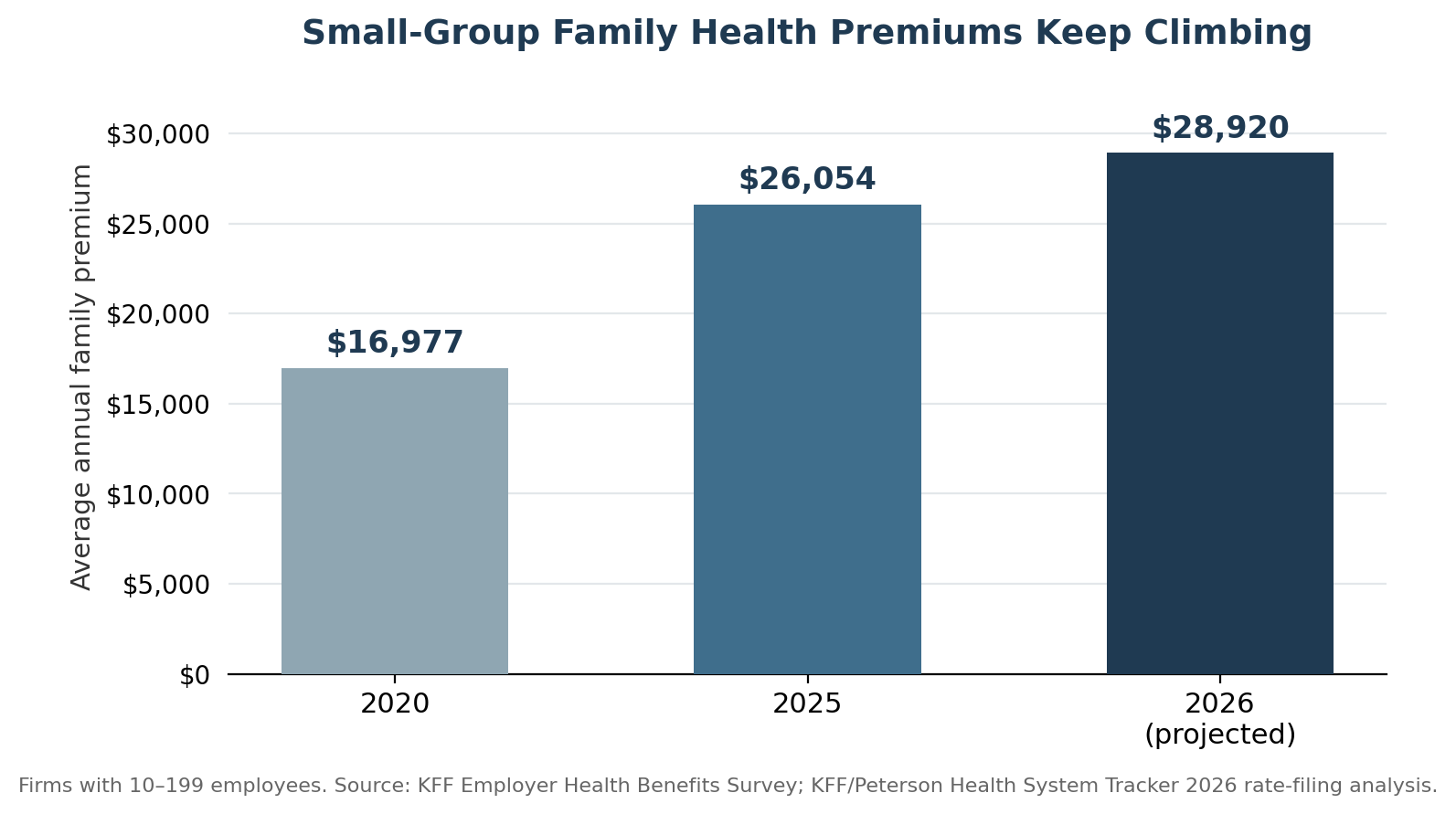
Small-group premiums are projected to climb another 11% in 2026 — on top of years of increases that already outpaced inflation. Level-funded plans are the fastest way to take back control.
You are probably overpaying — and you deserve to know for sure
Every year the renewal notice arrives with a bigger number and less explanation. You ask why, and the answer is some version of “market conditions.” Meanwhile your team's actual claims experience — the thing that should drive your price — stays a black box.
That opacity is not an accident of fully insured pricing; it's the model. Zuniga Health works with employers and their brokers to compare your current plan against level-funded alternatives—reviewing cost, workforce profile, participation, plan design, and renewal history side by side.
What a level-funded plan actually does
A level-funded plan replaces one opaque number with three transparent ones. Each month you pay a fixed amount that funds:
- Claims funding — the money set aside to pay your employees' actual medical claims
- Administrative costs — plan management, compliance, and support
- Stop-loss insurance — protection against a catastrophic claim year
The predictability feels just like a traditional premium. The difference is visibility: you get real insight into how your plan is performing, and depending on plan design, you may be eligible for money back when claims come in under projection. Overpay for the unknown, or fund what your team actually uses — that's the trade level-funding puts on the table.
The two models, side by side
Fully Insured
- Carrier sets the price — you take it or leave it
- You pay the same premium whether claims are high or low
- Minimal visibility into what's driving your cost
- Simple, but you're flying blind on renewal
Level-Funded
- Fixed monthly cost you can plan around
- Potential money back if claims run low
- Real visibility into plan performance
- More levers to manage cost long-term
The trade-off is real: underwriting, claims experience, and contract terms carry more weight in a level-funded arrangement, which is exactly why this deserves a careful, side-by-side review before you make any change — not a decision made from a renewal letter alone.
Your renewal increase just landed. Before you sign it, give us 60 minutes.
If your company checks even a few of these boxes, a level-funded review could save you real money:
- You employ 25 or more people
- Your workforce is stable, not high-turnover
- A workforce that may qualify for better underwriting
- Strong provider networks matter to your team
- Your renewal increase doesn't line up with your actual claims history
- Something in your gut says you're overpaying for risk you don't actually carry
If any of that sounds familiar, you're likely a strong candidate — and you may be leaving money on the table every month you wait.
Level-funded plans are especially powerful for:
- Start-ups and technology firms
- Companies with hourly or 1099 workers
- Trade and field-service businesses
- Professional firms (law, accounting, consulting)
- Multi-state, owner-led companies
The math is simple: 60 minutes now could mean thousands saved later. Let's find out what your real number looks like.
Why now
Every renewal cycle you stay on a fully insured plan without checking the alternative is another year of paying a premium set by market-wide trends — GLP-1 drug costs, hospital pricing, insurer consolidation — that may have little to do with your own team's health. Level-funded strategies are gaining traction because they offer:
- Pricing that reflects your workforce, not just the market
- Flexibility in plan structure
- A real shot at long-term cost control
- Continued access to strong PPO networks
- Visibility into what's actually driving your costs
- A renewal dynamic that isn't just “take the increase or leave”
A full suite of level-funded options
Zuniga Health doesn't push a single plan design — we help you find the level-funded product that actually fits your workforce and budget. Our suite includes:
- MEC (Minimum Essential Coverage) — a low-cost, compliance-focused base plan
- MVP (Minimum Value Plan) — broader coverage that meets minimum value requirements
- PPO — flexible, in-network and out-of-network access with strong provider choice
- HDHP (High-Deductible Health Plan) — lower premiums paired with HSA-eligible savings
Whichever direction fits, the plan is still level-funded — same predictable monthly cost, same visibility into performance, same potential for money back.
Contact us today for a free quote across our MEC, MVP, PPO, and HDHP level-funded plans.
Call Juan Martinez, Vice President.